
Why Your Sciatica Might Actually Be Dead Butt Syndrome
You’ve been told you have sciatica. Maybe you’ve even been told it’s piriformis syndrome. But according to Chad Johnson, Licensed Acupuncturist and founder of Asheville Orthopedic Acupuncture, there’s a good chance both of those diagnoses are wrong. The real culprit is something with a very different name: dead butt syndrome.
Chad joined host Travis Richardson on the Be Well Asheville Podcast for Episode 28 of the Wellness in Asheville series. The conversation is packed with practical, body-centered insight that makes you rethink how you’ve been treating your pain.
Episode 28: Chad Johnson on Orthopedic Acupuncture + Recovery Optimization
Listen on: Buzzsprout | Apple Podcasts | Spotify | Amazon Music
What Is Dead Butt Syndrome and Why Are You Probably Calling It Sciatica?
The gluteus medius is a muscle that attaches at the iliac crest, the upper outer edge of your hip. When you sit for extended periods, whether in a car, on a plane, or reclined on the couch watching Netflix, you compress that muscle for hours at a time and push the blood out of it.
The result is a necrotic, painful gluteus medius. Chad calls it what it is: dead butt syndrome. It is a real, recognized condition.
Here is what makes it tricky. The referred pain pattern from that muscle lands right at the sacrum and L5, which is your lower back. So people walk into Chad’s clinic pointing at their back, convinced they have sciatica. But the hip is the source of the problem.
“Everybody comes in and says, ‘I have sciatica’ or ‘piriformis syndrome,’ but it’s wrong in both cases. It’s this gluteus medius muscle. And the referred pain pattern is right here at the sacrum and L5.” — Chad Johnson, L.Ac.
If you sit for long stretches regularly, this is worth paying attention to.
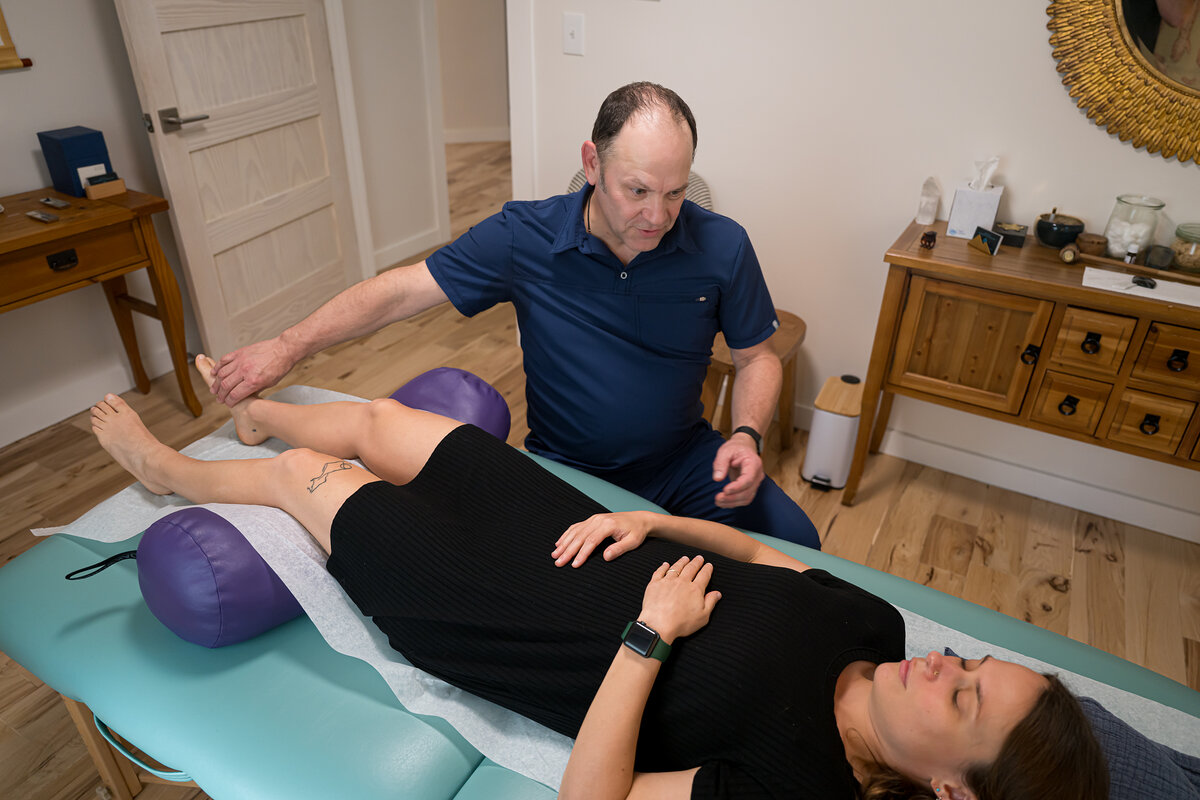
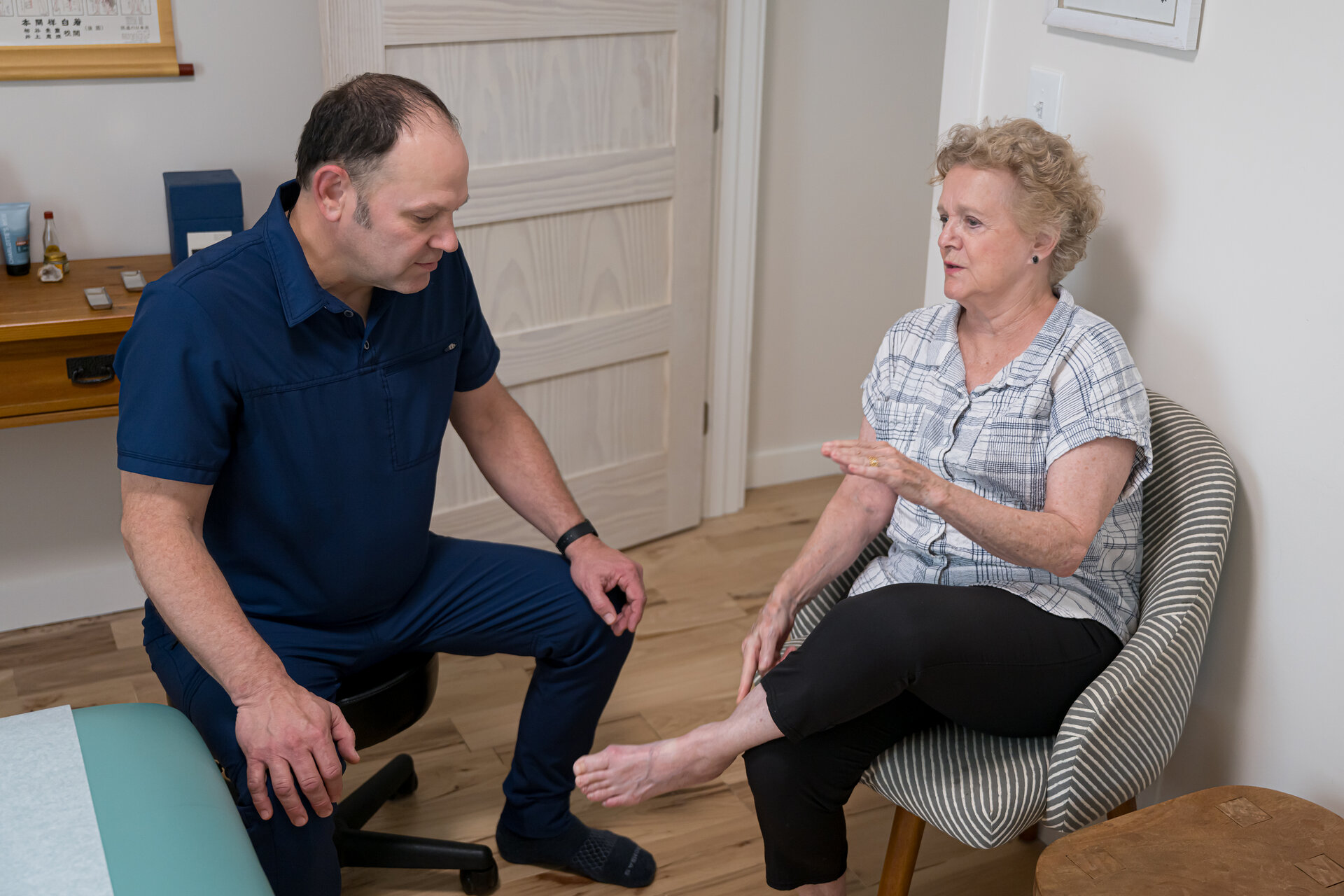
What Makes Chad's Approach Different
Chad studied at a school in New York that trained him in three distinct styles of acupuncture over three full years with no herbs, just acupuncture. That gave him an unusually broad technical foundation to draw from.
But what really sets his practice apart is palpation. Where many acupuncturists diagnose through pulse and tongue analysis, Chad reads the body through touch. He feels the whole muscle system, traces the channel blockages, and finds exactly where the dysfunction is hiding.
He uses the Kiiko Matsumoto Japanese style, which allows him to test a point before committing a needle to it. Using fingernail pressure at a candidate point, he checks whether tension in a target area reduces by at least 30 percent. If it does, the needle goes in and the expected result is 60 to 80 percent relief from whatever is being treated.
Patients feel the change in real time. That kind of immediate feedback is not something most acupuncture approaches offer.
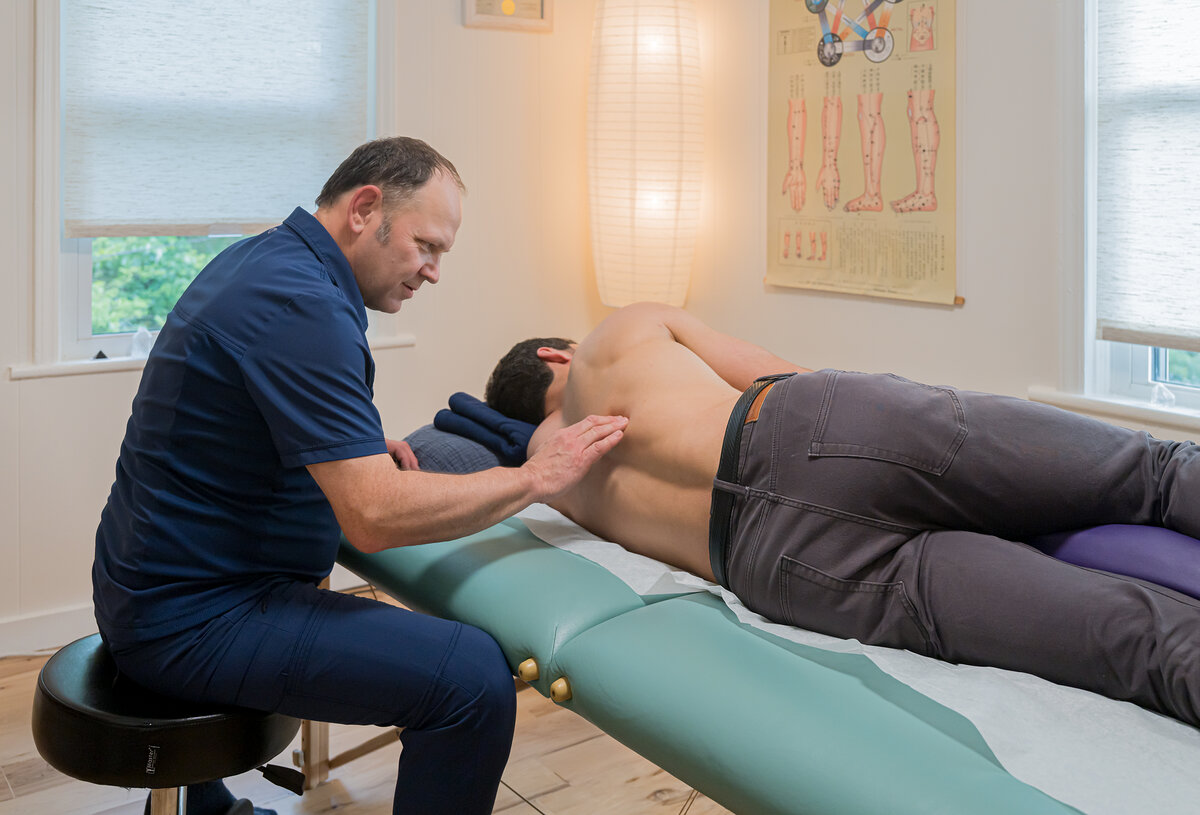
The Two Pain Patterns Chad Sees Every Single Day
Modern life is predictable in certain ways, and so is the body’s response to it.
Right shoulder pain is extremely common, largely because of how people use a mouse. Hovering the hand over a mouse for hours creates chronic tension in the right shoulder girdle.
Right hip pain almost always accompanies it. The right shoulder and right hip are closely linked through the body’s channel system. Between them lie the liver and kidney, so when one area goes, the other tends to follow.
These patterns feed directly into the gluteus medius problems described above. The lifestyle of modern sedentary work creates a cascade that most people try to treat locally, when the whole chain needs to be addressed.
Three Recovery Habits Chad Recommends to Everyone
Chad gives every patient the same foundational advice, regardless of what brought them in. These are not complicated, but most people are not actually doing them.
1. Hydration Done Right
Drinking water while sitting at a desk sends most of that water straight to the bladder. To get water into the muscles, you need to pair hydration with movement. Even light stretching immediately after drinking a half cup of water will drive that fluid into the muscle tissue rather than through to the kidneys.
This is why athletes can run for an hour without needing a bathroom stop. The movement is routing the water to where it is needed.
2. Conscious Breathing
Chad uses this term intentionally. From a Chinese medicine perspective, breathing is a two-part process. The inhale sends oxygen to the kidneys and the exhale releases it through the lungs. A deep belly breath that fully expands the lower lobes is what creates the lung-kidney connection, and that connection is central to the body’s ability to heal itself.
Most people breathe in choppy, shallow rhythms all day. A smooth, wave-like breath pattern directly affects heart rate variability because the lungs act as pressure pillows on either side of the heart, compressing and releasing it with each breath cycle.
Chad’s in-clinic reset technique: take one big breath in while raising the shoulders, then drop them hard. Follow with two more breaths at 60 percent in, 100 percent out, slowly. Just three breaths can bring a stress level from an eight down to a five.
3. Balancing Movement and Rest
Chad sees a lot of high-performers who push hard to recover and then re-injure themselves. During recovery from surgery, illness, or injury, the body needs more rest than usual, more hydration than usual, and movement that is smooth rather than strenuous.
Qigong-style movement, meaning smooth, full range of motion with no load, is what he recommends first. Strength training comes back only after the tissue has learned to open and close without resistance.
Why Acupuncture Before and After Surgery Matters
One of Chad’s strongest convictions is that acupuncture should be part of every surgical protocol. He has seen the difference consistently: patients who receive acupuncture both before and after a procedure recover significantly faster and more completely than those who do not.
This is not fringe thinking. The circulatory, neurological, and tissue-level effects of acupuncture directly support the body’s healing process, and timing treatments around surgery maximizes that support.
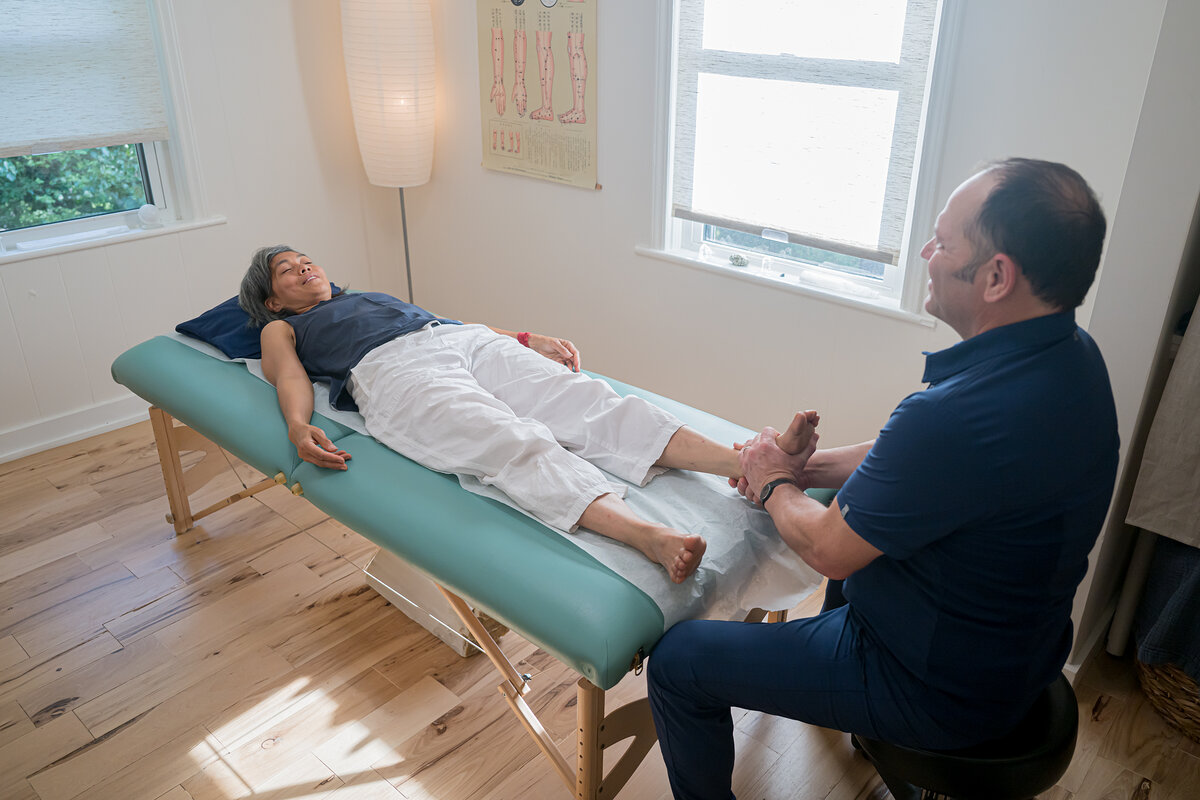
Maintenance Acupuncture for Longevity
A growing number of Chad’s patients come in not because they are in pain, but because they cannot afford to be. Business owners, caregivers, professionals with high-stakes responsibilities come in every two to four weeks to stay sharp, resilient, and functional.
As Chad put it: “I’ve got too much responsibility. I can’t die.” That is the mentality, and acupuncture as a longevity practice supports it. Better sleep, better recovery, better stress management, and better ability to sustain physical performance over time
Key Takeaways from the Episode
- Most sciatica pain is actually dead butt syndrome, which is gluteus medius compression from prolonged sitting
- The Kiiko Matsumoto style allows point-testing before needling for measurable, real-time results
- Right shoulder and right hip pain are the most common patterns in modern life and they are closely linked
- Pair hydration with movement so water actually reaches your muscles
- Deep belly breathing connects the lungs and kidneys, which is the foundation of the body’s healing cycle
- Acupuncture before and after surgery significantly accelerates recovery
- Regular maintenance acupuncture supports longevity, performance, and resilience
Listen to the Full Episode
You can find Episode 28 of the Wellness in Asheville Podcast on the Be Well Asheville website, or wherever you listen to podcasts.
Work with Chad
Chad Johnson, L.Ac. practices at Asheville Orthopedic Acupuncture on Haywood Road. To book an appointment or learn more, visit ashevilleorthopedicacupuncture.janeapp.com or call the clinic directly at 828-333-5087.
You can also find more info about CEU classes at tinyurl.com/moxahouse.
This post is for informational purposes only and does not constitute medical advice. Always consult a qualified healthcare provider before making changes to your health routine.