
828-333-5087
Ginger Congee for Winter | Kidney & Adrenal Support

Ginger Congee for Winter | Kidney & Adrenal Support

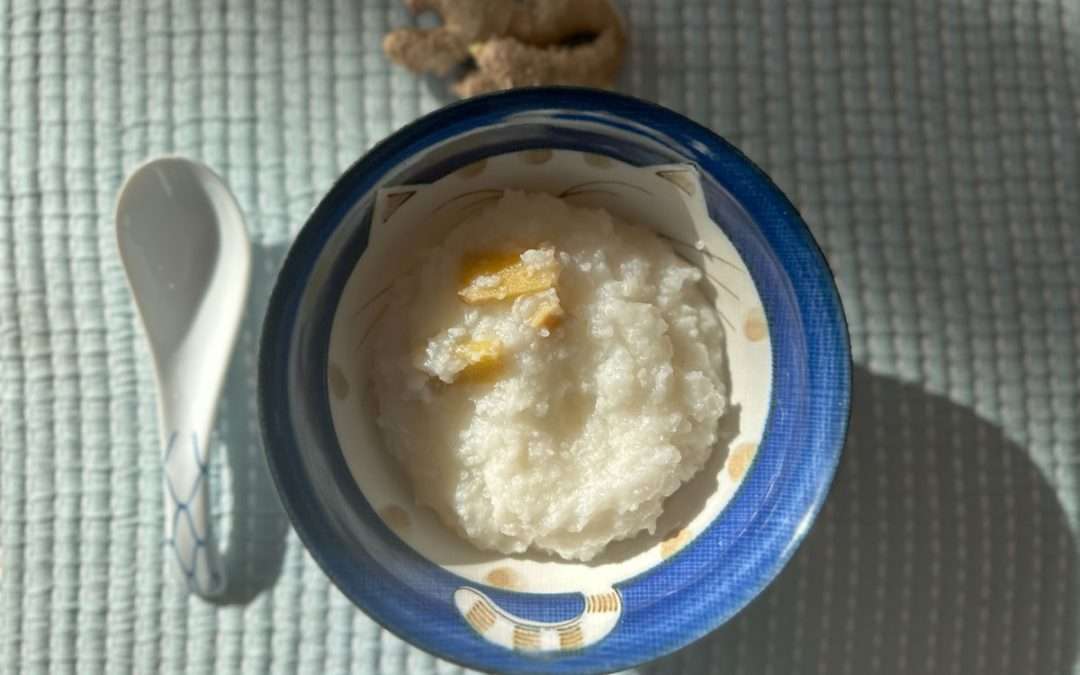
A bowl of ginger congee, on a textured blue placemat with a piece of ginger above and an asian spoon to the left. the light is early morning sunshine.

Photo credits: Congee imagery courtesy of Nicole DiDio Johnson

Ginger congee for winter is a warming, restorative recipe that supports Kidney and adrenal health during the colder months.

Coming from our newsletter and want the recipe only?
Jump straight to the recipe

Winter, the Kidneys, and Why Food Matters Now

In East Asian Medicine, winter is associated with the Water element and the Kidney system, a framework recognized by organizations such as the National Certification Commission for Acupuncture and Oriental Medicine. This system governs our foundational vitality, stress resilience, sleep quality, and capacity to recover rather than simply push through.

By January, many people are unknowingly drawing from adrenal reserves. We see this in the clinic even in people who otherwise feel healthy.

Common winter patterns include:
• Fatigue that doesn’t fully resolve with rest
• Feeling colder than usual, especially in the low back or feet
• Digestive sluggishness or reduced appetite
• Light or unrefreshing sleep
• A sense of being tired but wired

Winter is not the season to demand more from the body. It’s the season to protect reserves and rebuild.


Why Ginger Congee Helps in Winter

Congee is a slow-cooked rice porridge used for centuries as a therapeutic food. It supports winter recovery because it is warm, simple, and easy to digest.

Why we recommend it:

  • Minimal digestive effort, which helps conserve energy

  • Gentle warmth and circulation support

  • Steadier nourishment during stress and fatigue

  • A calming effect for the nervous system

  • Especially supportive during winter depletion patterns


Ginger Congee Recipe

A simple, restorative winter staple.

Ingredients

  • 1/2 cup white jasmine rice (or short-grain white rice)
  • 6 to 8 cups filtered water or light broth
  • 1 to 2 tablespoons fresh ginger, finely grated or thinly sliced
  • Pinch of sea salt

Optional additions

  • Soft-boiled egg
  • Shredded chicken
  • Steamed greens
  • Sesame oil
  • Scallions

Instructions

  1. Rinse the rice until the water runs mostly clear.
  2. Combine rice, water or broth, and ginger in a pot.
  3. Bring to a boil, then reduce to a low simmer.
  4. Cook uncovered for 60 to 90 minutes, stirring occasionally, until creamy.
  5. Add a pinch of salt. Top as desired. Serve warm.

Clinical Uses of Warming Congee

We might recommend congee:

  • During periods of high stress or disrupted sleep

  • When appetite is low but nourishment is needed

  • As part of winter Kidney and adrenal support plans

  • To add and support warmth in the body (especially when icey drinks are prevalent.)

Food can support the deeper regions of the body,  extend the effects of treatment, and support steadier recovery over time.


When to Seek Extra Support

If fatigue, anxiety, insomnia, pain, or digestive issues are lingering or worsening, it may be a sign your system needs more support than rest alone. Many patients explore acupuncture and massage for stress and fatigue as part of their winter care plan.

Our winter treatments focus on nervous system regulation, pain relief, and steady energy restoration. If you would like help choosing the right next step, we are here. Click here: (828) 333-5087 to get started with a phone call.

Seasonal Affective Disorder

Seasonal Affective Disorder

The holiday season is upon us. With it comes shorter days, longer hours of dark and for some of us, a struggle to feel balanced. Seasonal Affective Disorder (SAD) –produced by the reduced sunlight in the Northern hemisphere this time of year– does impact how we feel. The recent time change combined with the colder weather and gray skies might make us feel fatigued, lacking motivation, and an overall sense of feeling down.  The Vitamin D produced in our bodies after exposure to sunlight, plays an important role in regulating our mood and well-being. 

What can we do to improve our mood, energy, and happiness as the days get shorter and the night gets longer?

Here are 7 ways to shine your light in this season of Yin. 

1. Nourish the YIN.

 Be gentle with yourself this time of year.  In Chinese medicine, the winter is a time to slow down, rest and sleep more. We are moving into the deeper YIN time of the year, where the element of Metal is present.

Fall: Metal, Lung, Grief

The color associated with Metal is white, the organ is the Lung, and the emotion is Grief.  Regardless of how you feel overtly, there has been a tremendous amount of collective grief the past number of years. We have a lot to grieve. Honoring this, feeling this, validating this is important to our vitality. It’s OKAY and imperative to grieve and grieve well. 

2. Emphasize  hearty, warm and nourishing foods

This  helps us stay in sync with the season, connected, and grounded. If you are sleeping more and eating a bit more, remember that this is a natural part of your body’s rhythm for this time of year.

3. Acupuncture

As you may know (or suspect) Acupuncture helps regulate mood, balance hormones, and put the body into “rest and digest” mode, bringing a sense of balance & peaceful contentment. It reconnects the body, mind and spirit. Acupuncture sessions can support the lungs both physically and energetically and help you process grief.

4. Sun-gazing

Just as the sun breaks the horizon, go outside. Look around the sun – trace your eyes like a clock – this helps reset your circadian rhythm. Think of it as relighting your inner flame with the light of the sun. As the days get darker our light will shine brighter.

5. Try a sun lamp

They are most effective when set 20 inches from your face and used for 20-30 minutes in the morning. Sun Lamps mimic natural sunlight and give the body the impression of being out in the sun. This  helps improve mood when used consistently.

6. Walk outside even when it’s cloudy

Getting outside to get some natural light even if it’s not bright and sunny in combination with exercise helps improve mood. An  hour walk in the morning works wonders to elevate mood but even 10 minutes a day makes a difference.

7. Take some Vitamin D

You can test your vitamin D levels to see where you’re at. Supplement to ensure you’re getting enough. (Please check with your MD before starting any new supplements.)

In this season of Yin, shine your light.


We're Here to Help. 828-333-5087

Call our office to find out more or schedule your appointment online.
Tune into Spring, the Wood Element, and Heal Anger

Tune into Spring, the Wood Element, and Heal Anger

Spring is the element of WOOD and the color GREEN.

The ancient Taoists (Prounounced “dao-ists”) looked to nature to understand the human body, mind and spirit. They were philosophers and we need to be clear, Taoism is not a religion. When we tune into the movement of the seasons, we reconnect with and maintain our vitality. Just as with our circadian rhythms, our seasonal rhythms affect our health. Eating with the seasons is an excellent foundation to thriving health.

Spring- Wood – Green, Liver,
Liver out of balance = Anger
Liver in balance = Flow

In Spring, Yang is Rising

Let’s look around, what do you see? Trees starting to leaf out, flowers begining their bloom, greens pushing up? This is YANG rising. This is the start of the great in-breath – the height of which is the heat and outward orientation of summer. Yang is rising, the rivers are flowing, the birds are chirping and making nests, we all come out of hibernation.

The LIVER is the organ associated with spring. If our liver is in balance we experience free flow of qi (energy, emotions). If our liver needs some support, we may be quick to anger, snap at loved ones, or experience a low slow simmer of anger. Also, referred to Liver Qi Stagnation. I suffered with this for years. It’s true. Part of this is constitutional, meaning I have a tendency towards this, my family has a tendency, essentially – lots of – um- venting. Living in the south has been a balm to my constitution. I deeply enjoy – and have learned from- the kindness and generosity of spirit I have met in this region.

One of the solutions to opening up the free flow of liver qi is to take an aimless walk. This is for real, and it works wonders at opening up the free flow of liver qi. There is also a wonderful Chinese Medicine herbal formula called, Free and Easy Wanderer. Also, very helpful. These work wonders in conjunction with acupuncture which will support your liver and it’s reflexes. Feel free to ask us more about these remedies.

Healing Foods

Foods to add in to your diet are – Greens, Greens, Greens. Greens impart, light, flexible energy to us. Bitter Greens and herbs, support the liver directly. Dandelion, Broccoli Rabe, and Nettles are especially helpful. Chickweed is growing abundantly, add this to your salads or smoothies. When working with the more bitter greens, please be sure to have them with plenty of healthy fat, it cuts the bitterness and adds a nutritional punch. Health fats would include  Avocado oil, coconut oil, ghee, grass fed butter, and for those who tolerate it- bacon fat. A wonderful tincture to support the liver is Milk Thistle.

But truly, any greens- the fresher the better. These new greens that sprout up are here to help us clear away stagnation. Here is a fantastic Nettles Pesto recipe that I love to make with Fresh Nettles every spring. I usually do a green juice cleanse and my spirit and my body feel lighter and more upbeat.

Helpful Stones

A wonderful stone for this time of year that would support the free flow of liver qi is Amazonite. Known by the ancients as “Heaven flowing into the river stone.” It is calm, tranquil and supports us.

Here are some other thoughts to help us tune into the beauty of Spring.

  • Young plants
  • Spring fever- is Yang Rising
  • Moved by nature – Emotions, awakening
  • Nature sings, puts on a show
  • Slough away the old, the dense
  • Joyousness and Cheer
  • Tending to the garden can bring joy and connection

As we align our hearts with Nature, we arrive more deeply into balance.

Interested in Acupuncture or Health Coaching? We're Here to Help. Schedule Now.

 or Call our office 828-333-5087​ to discuss your options.

Give Yourself a Break and Support Your Adrenals

Give Yourself a Break and Support Your Adrenals

It’s been a rough few years and we have all been -to varying degrees- in fight or flight. This raises cortisol and puts extra strain on the Adrenal Glands.

Here are some quick tips to support your healthy body and its myriad of functions:

  • Get plenty of rest – 8-10 hours of sleep, embrace naps, and scheduled downtime.
  • Hydrate – have you tuned into your water lately? Drink high quality H2O and plenty of it.
  • Support your Kidneys (the Adrenals and Kidneys are best friends) – do this by doing the above, drinking bone broth or vegan mineral broth, keeping warm, being chill.
  • Moxa & Acupuncture support the Kidneys and Adrenal function – they are the deepest layer, they are in charge of the will and in relationship to the heart spirit as well. A moxa and acupuncture treatment can support better sleep (goodbye insomnia), relieve anxiety, and support the body in keeping the parasympathetic response.

What is your stress level on a scale of 1-10?

Sometimes the first step is to realize you are operating at a high level of stress. Some folks feel like they are at a 4 when they’re really at an 11 on scale of 1 to 10. Take a moment to tune in and assess where you really are. Are there activities or habits you can let go of?

We are here to support you. Call to schedule an acupuncture treatment or a health coaching phone session.


We're Here to Help. Schedule Now.

 or Call our office 828-333-5087​ to discuss your options.

Rawkos! A Fun and Healthy Travel Food.

Rawkos! A Fun and Healthy Travel Food.

Here’s a healthy, tasty recipe that will bring into you in the summer mode. This is a popular favorite from our Seasonal Cleanse. It’s great food to travel with and requires NO COOKING. Rejoice the Rawko!  It’s like a taco but it’s raw – not raw meat – raw foods (means no cooking, more enzymes, more energy, packed with flavor). We’ll admit, it can be a bit of an odd concept at first but once you try them, you may just be pleasantly surprised.


Make the Wraps

  • 1 Bunch of collard greens* There is a misunderstanding that collards are bitter, not so! Pair them with a protein and a fat and eat them raw and your will be forever changed.
  • Rinse and de-stem – leaving 2 halves (depends on how many people are eating– figure 2-3 wraps per person)
  • Pat those dry

Sweet Cucumber Salsa

  • 1 apple – peeled, cored, diced
  • 1 cucumber – peeled, seeded, diced
  • 1 medium sweet yellow onion – diced
  • Parsley and/or cilantro – washed and diced
  • A few pinches of Himalayan or Celtic sea salt (these are quality high mineral salts)
  • Fresh squeezed lemon
  • Add all ingredients together, then add in salt and lemon – make sure it really gets on that onion! Toss, let sit.

Rawko “meat”

Why the non-meat tacos – er- rawkos? Because they are delicious. Because raw foods pack an amazing amount of energy and vitality, and because everyone loves new and exciting foods that make them feel good with no negative repercussions.  So here you go:

  • 1 -2 cups of raw organic walnuts (again, depending on how many people you are feeding)
  • 2-6 TBS of gluten free tamari (go easy on this — it can get real salty quick)
  • Add to a high speed blender or food processor and blend it up

Making Rawkos

  • Lay your collard wrap on a flat surface
  • Spread 1-2 tsp of the rawko “meat” onto the wrap length-wise
  • Add some salsa (this offsets the heavy flavor of the walnuts nicely)
  • Here, I added some sunflower sprouts for some more green and texture
  • Roll up and enjoy.

You can pre-roll these and eat them on a car ride — or pack the ingredients separately and take to go and assemble on site. Enjoy!

4 Ways to Make the Most Out of Water

4 Ways to Make the Most Out of Water

What is the best way to Hydrate? There are a lot of differing opinions out there (much like with food) and many of them are sound and good. So how do you know which is best for you?

The Answer: You have to tune in and find out.  Here are a few quick tips on the best way to make the most out of drinking your water.

1. Drink 2-4 cups with lemon upon waking.

When we sleep, our bodies are very busy repairing and detoxing. When we awaken, we are actually quite dehydrated. When you wake up squeeze a wedge of lemon into a glass of water and drink it. The lemon helps cleanse your liver and flush out toxins as the water hydrates you. My Nana used to do this every morning. It’s a terrific way to start hydrating and getting in your glasses of water. Then drink a tall glass of water.

2. Don’t drink water while you eat.

When we chew, we release digestive enzymes –digestion begins in the mouth. If we down water with our food, we dilute our digestive juices and hamper, digestion and absorption. Wait 20-30 minutes before or after you eat to drink your water — in between meals.

3. Drink throughout the day, and stop a few hours before bed.

Start first thing in the morning. Drink water when you’re hungry instead of reaching for a snack right away. See if water can quench your perceived hunger. Timing differs for everyone, find your optimum stopping point so that you may have a full night’s rest without waking for trips to the bathroom.

4. How much?

While it’s important to hydrate, how much water depends on what you’re eating. If you’re diet is rich with raw fruits and vegetables, you’ll find you need less water. If you eat a lot of cooked foods (the water cooks out) you’ll require more water by the glass. It’s important for you to be the judge. In the winter we tend to drink less water.  A basic rule of thumb is the drink half your body weight in ounces. Example: 140lbs = 70 ounces of water per day.  Keep in mind, too much water drinking can tax the kidneys.

Not enough water can cause dehydration, increased appetite, dry skin, hair, brittle nails, sluggishness, constipation and whole host of other things. There are many health professionals that believe the root of illness and disease is chronic dehydration. Our job is to tune into our unique body to find out what it needs. 

When I follow the steps above, I stay regular (who doesn’t want that?), my skin looks great, my energy flows, and I feel good. I do however, have to make a conscious effort to hydrate, the habit comes and goes for me. What about you?

Test out steps 1 -3 for a week and let us know what you find out. How much water are you drinking now? What are your water drinking goals?

Read about Hydration’s Role in Healing.